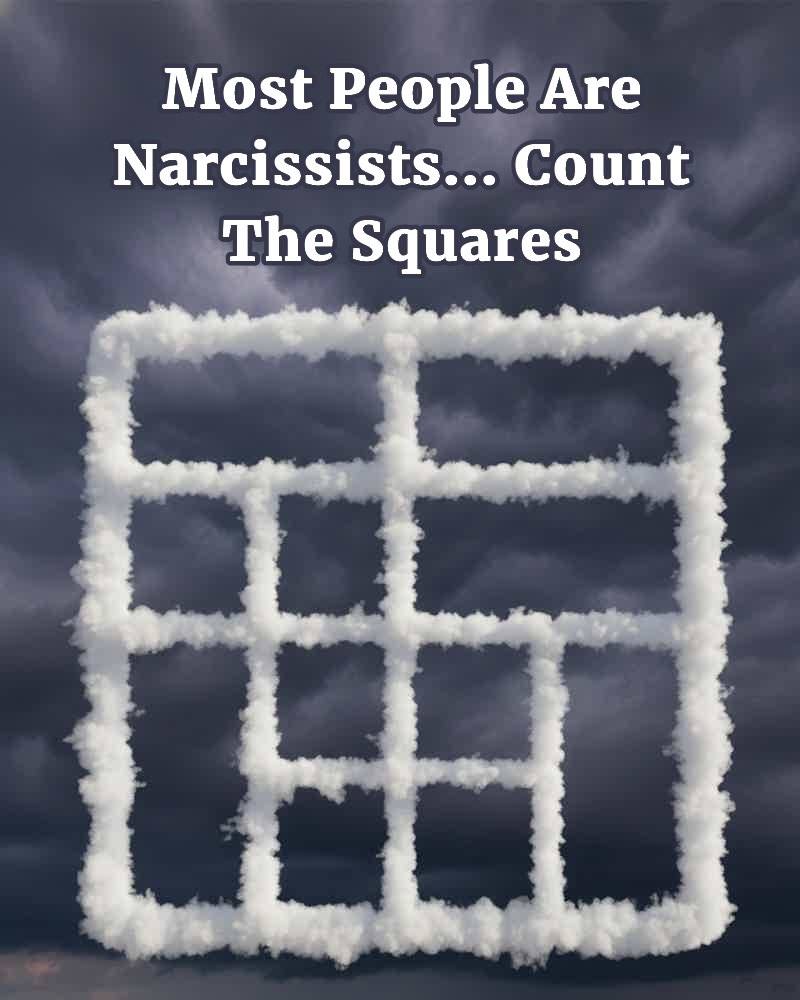
A single cloud of squares. One loaded question. And a ruthless claim: “Most people are narcissists.” At first glance, it’s just a grid—simple, unassuming, almost trivial. Yet the moment you stare at it, something subtle begins to happen. Your eyes scan the arrangement, your mind calculates, and an unexpected tension arises. You count the squares, your fingers hover over the keyboard or the paper, and your brain nags: Did I miss one? Am I supposed to see more? Are others noticing details I’m overlooking? What seems like a casual visual puzzle quietly begins to probe something far more profound. It becomes less about the squares themselves and more about how you process them, how you attend to detail, and how your assumptions shape your perception.