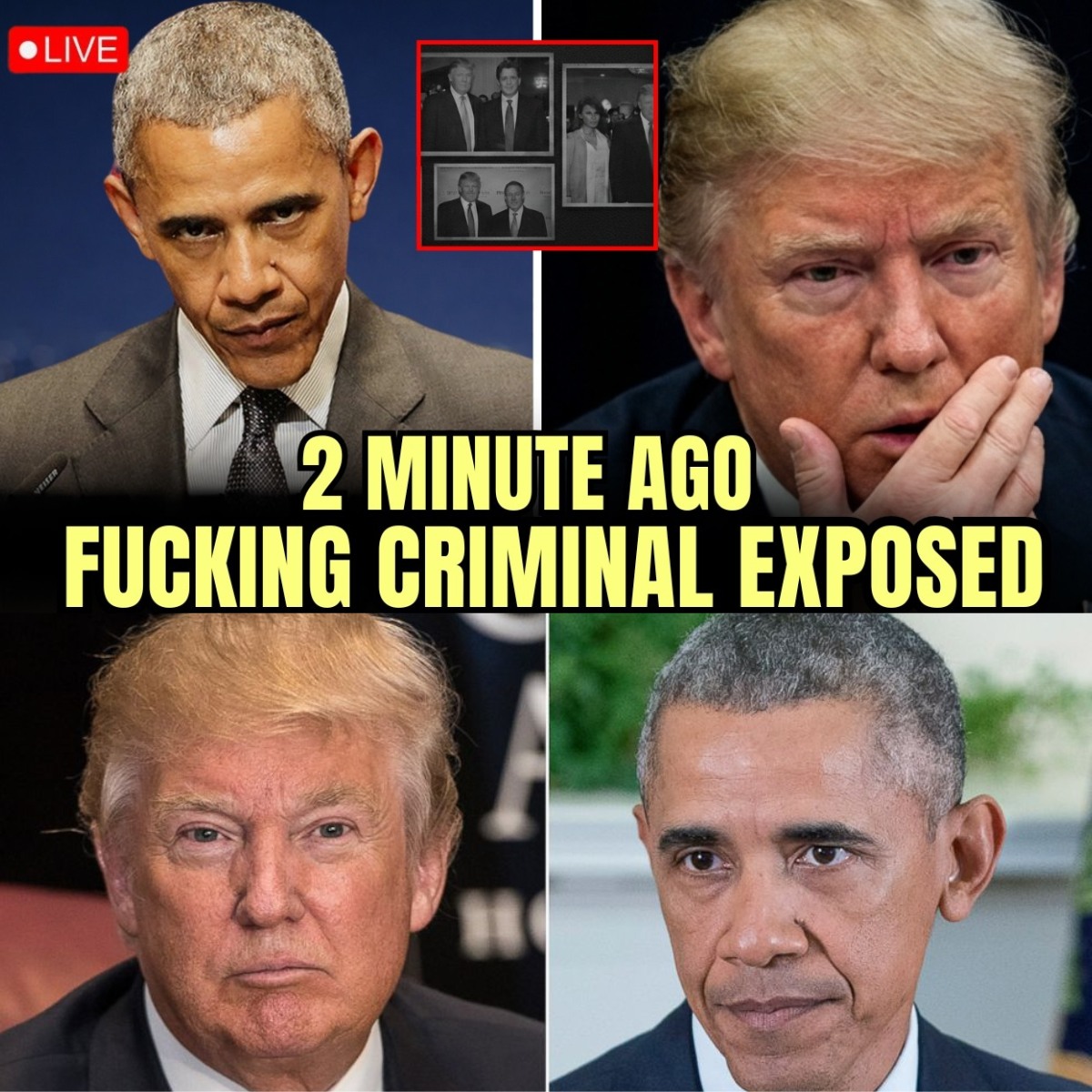
🔥 JUST IN: Donald Trump Says He Was Never With Jeffrey Epstein — Barack Obama Pulls Out Five Photos LIVE and the Room Falls Silent ⚡
The long and complicated history surrounding financier Jeffrey Epstein has periodically resurfaced in American political debate, drawing in a wide circle of public figures who once moved through the same elite social networks. This week, that history again became the focus of attention after a dramatic exchange involving former president Donald Trump and former president Barack Obama circulated widely online.
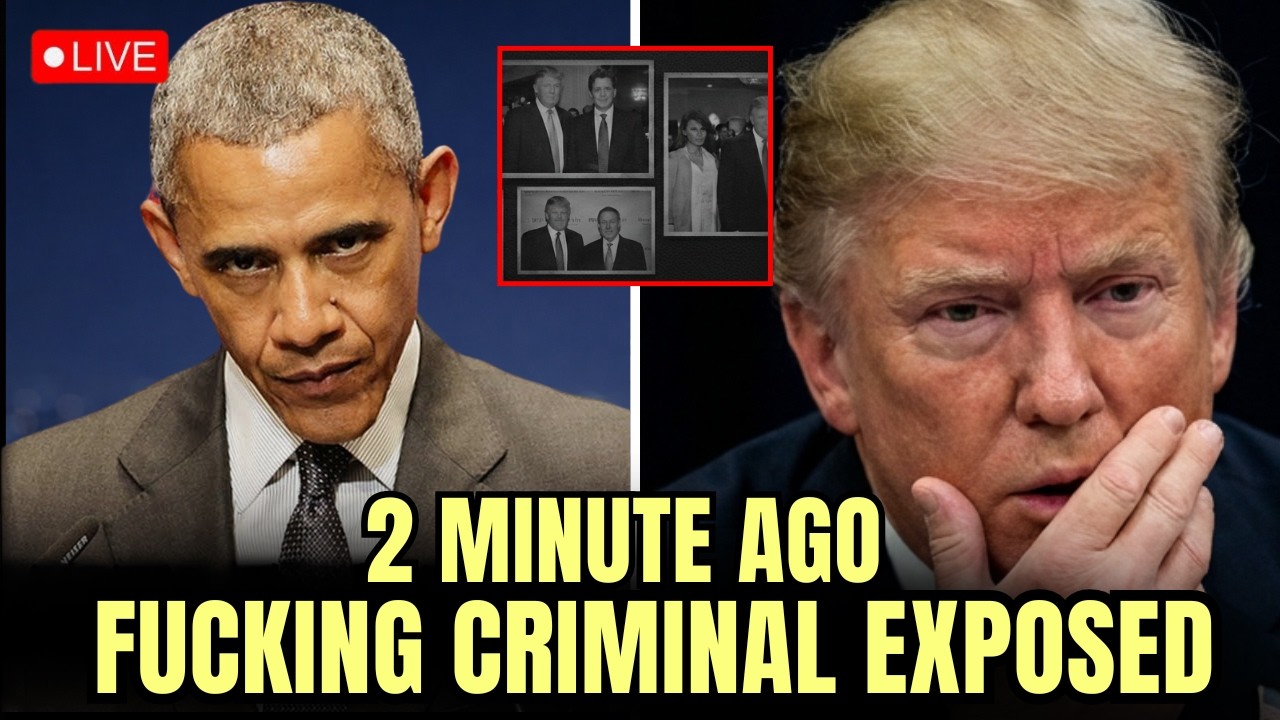
The moment, discussed extensively across television commentary and social media, centered on Mr. Trump’s longstanding claim that he had little or no meaningful relationship with Mr. Epstein, the financier who died in 2019 while awaiting trial on federal sex-trafficking charges.
For years, Mr. Trump has maintained that he was not closely connected to Mr. Epstein, emphasizing that the two had not been in contact for decades before Epstein’s arrest. When questions about Epstein’s network of wealthy acquaintances arise, Mr. Trump has frequently argued that the media and political opponents have attempted to draw connections that exaggerate or misrepresent the nature of those relationships.
In the widely circulated exchange, Mr. Trump repeated that position, saying he had “nothing to do” with Epstein and suggesting that investigators had already reviewed extensive documentation without finding evidence implicating him in wrongdoing.
The comment referred to the large body of records compiled during federal investigations into Epstein and his associates. In recent years, the United States Department of Justice has released significant numbers of documents connected to those investigations, though many materials remain sealed or partially redacted due to privacy protections and ongoing legal considerations.
But the discussion took a different turn when Mr. Obama responded by focusing not on written records but on visual evidence that has circulated publicly for years.
Images showing Mr. Trump and Mr. Epstein together at social events during the 1990s and early 2000s have been widely reported in the press. In some of those photographs, the two men appear alongside socialite Ghislaine Maxwell, who was later convicted of assisting Epstein’s trafficking operation.
Such photographs do not in themselves demonstrate wrongdoing, but they have long complicated efforts by public figures to distance themselves from Epstein after his crimes became widely known.
During the exchange, Mr. Obama referenced the images sequentially, highlighting how they appeared across different events and time periods. Observers noted that the approach emphasized a broader pattern of social proximity rather than a single moment captured in isolation.
Political analysts say the strategy reflected a familiar dynamic in public controversies: the tension between categorical denials and evidence that suggests at least some level of acquaintance.
In Mr. Trump’s case, photographs with Epstein have been part of the public record for decades. The two men were both fixtures of wealthy social circles in New York and Florida during the 1990s, and they were occasionally photographed together at parties or gatherings attended by other high-profile figures.
Mr. Trump has previously acknowledged knowing Epstein socially but has also said the relationship ended long before Epstein’s criminal conduct became widely known. In interviews over the years, he has stated that he barred Epstein from his Mar-a-Lago club after a dispute, though details of that claim have been debated by journalists.
The reemergence of those images reflects the enduring fascination with Epstein’s network of connections. Investigators and reporters have spent years examining the circles of business leaders, politicians and celebrities who crossed paths with him.
Among the names that have appeared in public discussions are former president Bill Clinton and technology entrepreneur Bill Gates, both of whom have acknowledged limited contact with Epstein while denying involvement in any wrongdoing related to his crimes.
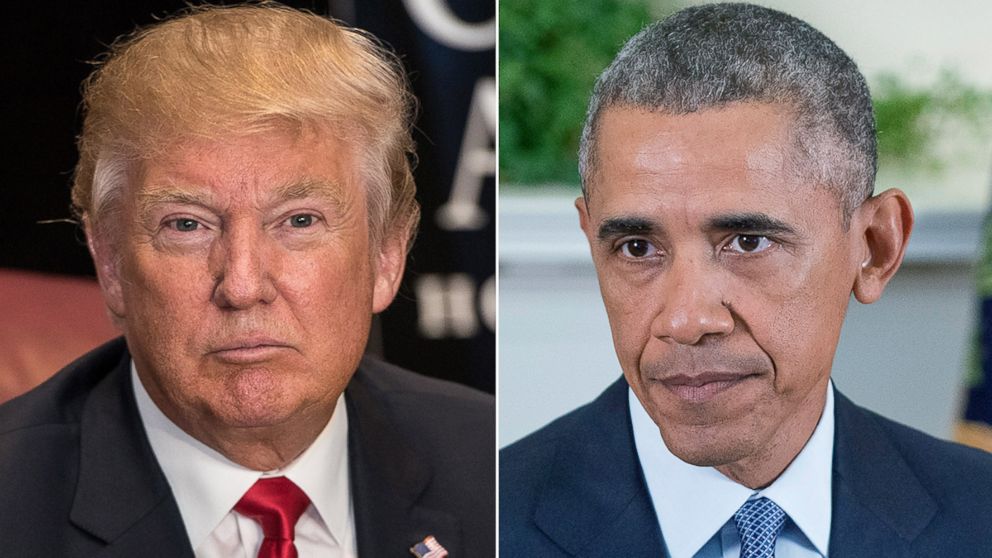
For many Americans, the broader question surrounding Epstein has been less about any single relationship and more about the influence networks that allowed him to maintain access to powerful institutions for years.
That larger context helps explain why photographs and archival records continue to resurface whenever public figures discuss their past interactions with him.
Media scholars note that visual evidence can carry unusual weight in public debates because images are often interpreted as more immediate or tangible than written testimony. Even when photographs reveal little about the nature of a relationship, they can shape perception by demonstrating proximity and familiarity.
In political settings, those dynamics are amplified. A public denial can be evaluated against images that appear to contradict it, creating moments that resonate with audiences far beyond the room in which they occur.
Within hours of the exchange circulating online, clips and commentary spread across social media platforms and cable news broadcasts. Supporters of Mr. Trump argued that photographs alone prove little about the depth of a relationship. Critics countered that repeated images across different years challenge claims of minimal contact.
For Mr. Obama, who rarely engages directly with Mr. Trump in public forums, the moment stood out for its restrained tone. Rather than escalating the confrontation, he framed the issue as a question of credibility and public trust.
Ultimately, the renewed debate underscores how unresolved the broader Epstein story remains. Years after the financier’s death, documents, photographs and testimony continue to surface, prompting new rounds of scrutiny about the powerful individuals who once moved within his orbit.
For politicians and public figures alike, those archival traces have become a reminder that in the digital age, the past rarely stays buried.